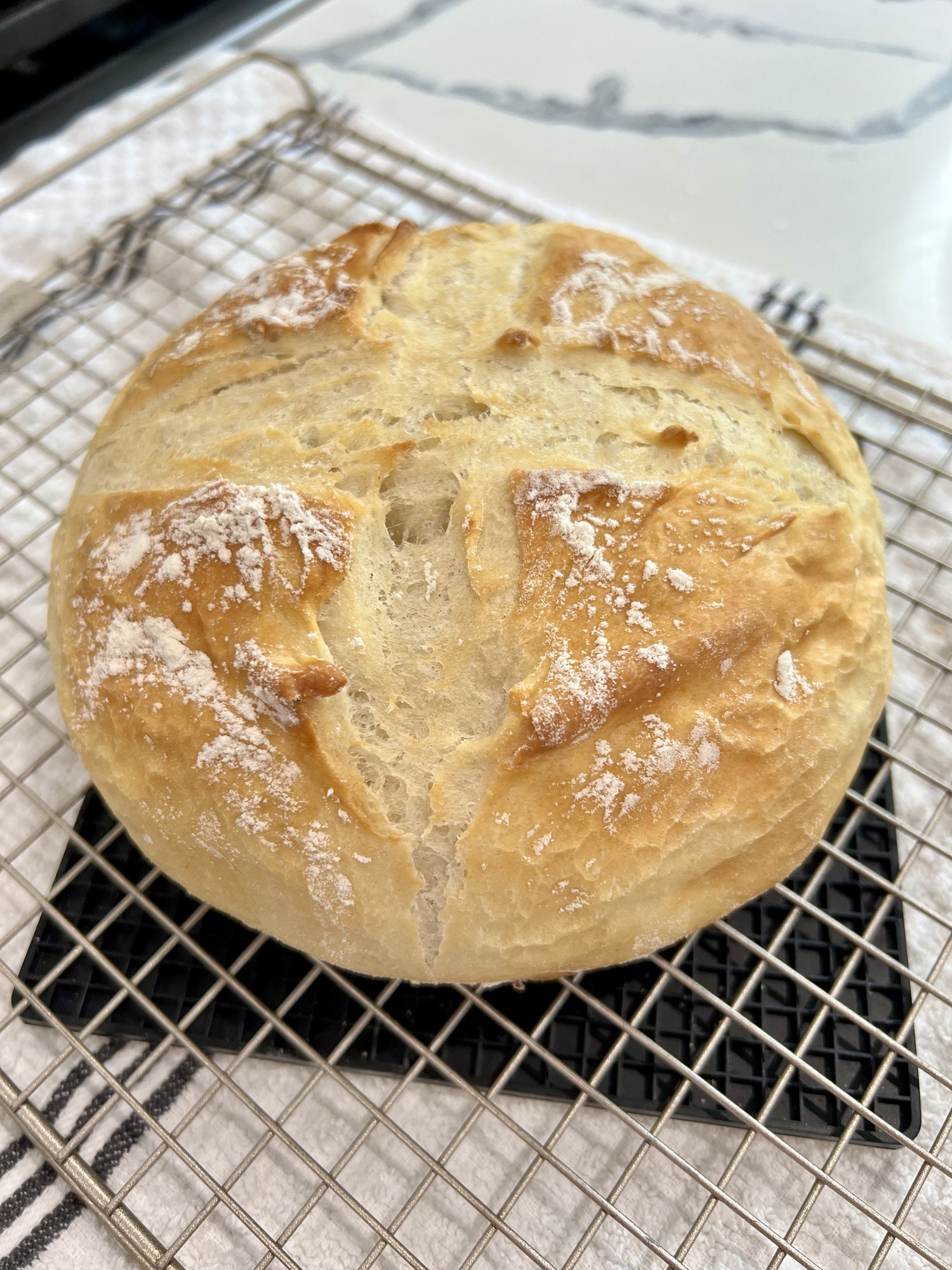
Discover the Secret to Perfect Homemade Bread with this Easy Rustic Bread Recipe


Homemade bread is undeniably satisfying. Whether it be a simple homemade no-sourdough baguette or an enriched milk loaf sandwich bread, the aroma of freshly baked bread fills the home with warmth and invites everyone to the table. But who says baking bread has to be complicated? Hence, this simple, easy rustic bread recipe is perfect for beginners and delivers exceptional results without the fuss.
Understanding Your Yeast
First, before we dive into this easy rustic bread recipe, let’s clarify the different types of yeast available.
Fresh Yeast: Sometimes referred to a compressed or cake yeast is the most flavorful option but has the shortest shelf life. Moreover, it’s usually sold in small blocks and requires refrigeration and even so, its shelf life is approximately two to three weeks. And for this reason, it is most commonly used in bakeries. Specifically, this easy rustic bread recipe uses fresh yeast. However, instant or active yeast can be substituted. Importantly, when converting fresh yeast to instant or active yeast use 40% of what the fresh yeast states in the recipe. For example, the below included recipe calls for 20 grams fresh yeast. That means, if using instant or active dry yeast use 8 grams.
Instant Yeast: This type is more convenient as it doesn’t need to be activated before use. It can be added directly to dry ingredients. Instant yeast may be stored up to two years. Furthermore, storing it in the refrigerator or freezer results in remaining fresh. Notably, we store it in the freezer.
Active Dry Yeast: This is the most common type and requires blooming in warm water before use. The use of active dry yeast usually adds five to ten minutes to the total recipe time.
Further, while this easy rustic bread recipe calls for specific measurements, remember that yeast is a living organism and its potency can vary. Always check the expiration date and follow the package instructions for the best results.
Tips for Bread Baking Success – Easy Rustic Bread Recipe
Temperature Matters: Yeast thrives in a warm environment. Aim for a room temperature between 70-75°F for optimal rising.
Don’t Over-mix Over-mixing can lead to a tough bread. Gently combine the ingredients.
The Importance of a Stoneware Bread Baker or Dutch Oven: Using a Dutch oven creates a wonderful crust and even baking. Specifically for this easy rustic bread recipe the covered stoneware baker works perfectly.
Let It Cool: Allow the bread to cool completely before slicing. This will help the crust develop its crunch and prevent a raw tasting loaf. Notably, the bread continues to cook for a few minutes during the cooling stage.
Experiment and Enjoy
This basic easy rustic bread recipe is a fantastic starting point. Feel free to experiment with different flours, add herbs or cheese to the dough, or try different scoring patterns on the top of the loaf. Specifically, when scoring breads we highly recommend using a bread scoring tool like a Dough Scoring Knife.. The possibilities are endless!
Remember, baking is a journey, not a destination. Don’t be discouraged if the first loaf isn’t perfect. With each attempt, you’ll gain valuable experience and confidence in the kitchen.
Disclosures:
Terms of Use
The contents of this website are for educational purposes and are not intended to offer personal medical advice. You should seek the advice of your physician or other qualified health provider with any questions you may have regarding a medical condition. Never disregard professional medical advice or delay in seeking it because of something you have read on this website. The Nutrition Source does not recommend or endorse any products.
Product disclosures
Some of the links in this post are affiliate links. This means that, at zero cost to you, JulietKitchen may earn an affiliate commission if you click through the link and finalize a purchase.
Nutritional information
This website provides approximate nutrition information for convenience and as a courtesy only. Nutrition information can vary for a variety of reasons. For the most precise nutritional data use your preferred nutrition calculator based on the actual ingredients you used in the recipe.

Easy Rustic Bread Recipe
Equipment
- 1 glass mixing bowl or stainless steel
- 1 bread knife aka: lame
Ingredients
- 400 grams all purpose flour
- 10 grams granulated sugar
- 8 grams kosher salt
- 20 grams fresh yeast or 8 grams instant yeast or 8 grams active dry yeast
- 240 grams water room temperature
- extra flour for kneading and dusting the dough
- couple teaspoons milk for brushing the dough

Instructions
- Combine flour, sugar, salt and yeast into a large mixing bowl. Use a bread whisk to mix together.Note: If using active dry yeast bloom it in some of the recipe's water and a pinch of the sugar.400 grams all purpose flour, 10 grams granulated sugar, 8 grams kosher salt, 20 grams fresh yeast
- Add in the water and whisk to combine.240 grams water
- Transfer the dough to a lightly floured work surface. Knead 3 to 4 minutes until smooth.extra flour for kneading and dusting the dough
- Form the dough into a round. Add it to a lightly greased bowl. Cover with plastic wrap. Set aside in a draft free location and proof for 25 to 30 minutes.
- Transfer the dough to a clean work surface. Pat with your palm to remove the excess gas (Degas). Shape into a round. Place the round seam side down onto a crumpled up parchment paper sprinkled lightly with flour.
- Lift the parchment paper with the dough and transfer it to a covered round stoneware baker or dutch oven pot. Cover and final proof for 45 to 50 minutes.
- In the meantime, preheat the oven 450F Degrees
- Brush the top of the dough lightly with milk. Dust lightly with flour. Score the dough with your desired design. Cover the baker. Bake in the preheated oven for 30 to 35 minutes.couple teaspoons milk for brushing the dough, extra flour for kneading and dusting the dough
- Remove the baker from the oven. Transfer the dough onto a wire rack and cool completely. Enjoy.
Video
Nutrition





Leave a Reply